
Did You Know Ants and Humans Have Surprisingly Similar Total Weight on Earth
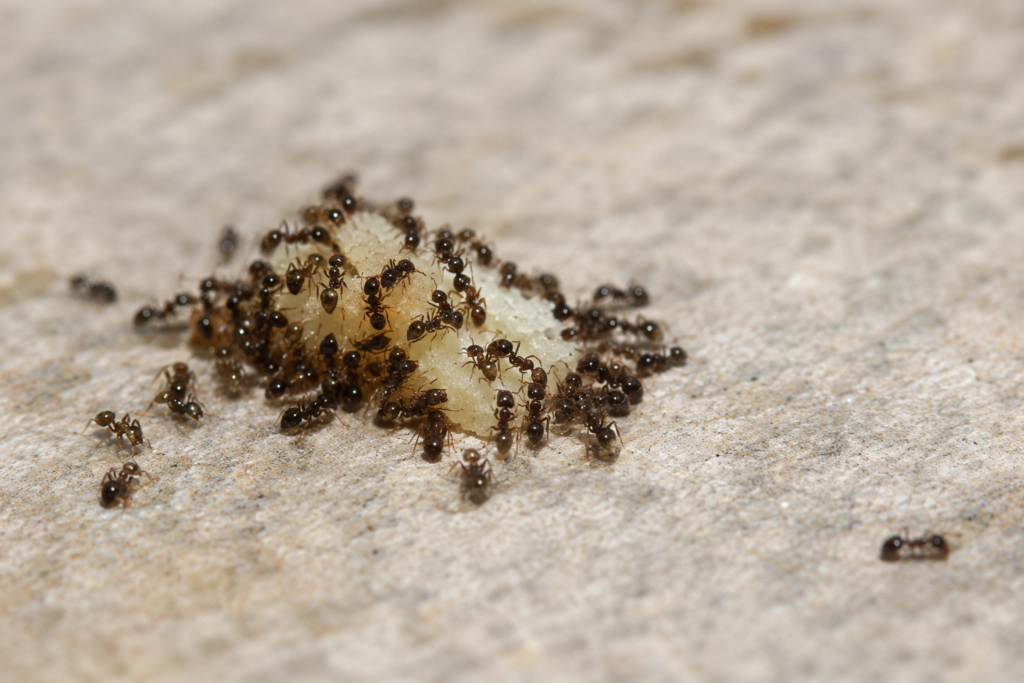
Have you ever heard the claim that all the ants on Earth weigh as much as all humans combined? It sounds like one of those unbelievable science facts that circulate on social media, but there is actually some truth behind it. Considering that a single ant weighs only a fraction of a gram, it seems impossible that these tiny insects could collectively rival the weight of more than eight billion people. However, when scientists studied ant populations and biomass, they discovered something remarkable.
The world is home to an astonishing number of ants. These small insects can be found on every continent except Antarctica and live in environments ranging from deserts and forests to cities and farmlands. Their sheer numbers have made them one of the most successful groups of animals on the planet. This raises an interesting question: if all ants on Earth were placed on a giant scale, would they really weigh the same as humanity?
Understanding Biomass
To answer this question, we first need to understand the concept of biomass. Biomass refers to the total mass of living organisms within a specific area or across the entire planet. Scientists often use biomass to compare different groups of organisms, such as humans, insects, mammals, or plants.
When people say that ants weigh as much as humans, they are usually talking about total biomass rather than the weight of individual ants. Obviously, a single ant is much lighter than a human being. However, because there are trillions upon trillions of ants on Earth, their combined mass becomes incredibly significant.
How Many Ants Are There on Earth?
Recent scientific studies estimate that there are approximately 20 quadrillion ants living on Earth. To put that number into perspective, it is written as:
20,000,000,000,000,000
That means there are roughly 2.5 million ants for every human being on the planet. Even if the average ant weighs only a few milligrams, multiplying that tiny weight by 20 quadrillion results in a surprisingly large total mass.
Scientists reached these estimates by studying ant populations in different ecosystems around the world and using statistical models to calculate global numbers. Their findings revealed that ants are among the most abundant animals on Earth.
Do Ants Really Weigh the Same as Humans?
The idea that ants collectively weigh as much as humans has existed for decades. Early estimates by biologists suggested that the total biomass of ants was roughly equal to the total biomass of humanity. This fascinating comparison quickly became one of the most popular science facts in the world.
However, modern research has refined these calculations. Current estimates indicate that humans likely outweigh ants overall, mainly because the global human population has grown significantly and average human body weight has increased in many countries.
Despite this, ants still represent an enormous portion of Earth’s animal biomass. Their total mass remains within the same general range as humanity, which is remarkable considering their tiny size.
In other words, while the statement that “ants weigh the same as humans” may not be perfectly accurate today, it is surprisingly close when compared on a planetary scale.
How Many Ants Equal the Weight of One Human?
Let’s consider an average adult weighing 70 kilograms. The weight of an individual ant varies depending on the species, but many common ants weigh between 1 and 10 milligrams.
Using these figures, it would take hundreds of thousands or even several million ants to equal the weight of a single 70-kilogram person. While that sounds like an enormous number, it becomes much easier to understand when you remember that there are 20 quadrillion ants on Earth.
If enough ants were gathered together to reach a combined mass of 70 kilograms, they would weigh exactly the same as a 70-kilogram human. Weight is simply a measurement of mass under Earth’s gravity, regardless of whether that mass comes from one large organism or millions of tiny ones.
Why Are Ants So Successful?
One reason ants have achieved such impressive numbers is their highly organized social structure. Ants live in colonies where individuals work together to gather food, defend their nest, and care for young ants. This cooperation allows colonies to survive and thrive in a wide variety of environments.
Ant colonies can range from a few dozen individuals to millions of members. Some species create vast underground networks with multiple chambers dedicated to food storage, nurseries, and protection from predators.
Their adaptability has enabled ants to spread across nearly every terrestrial habitat on Earth. As a result, they play a crucial role in maintaining ecological balance.
The Important Role of Ants in Ecosystems
Ants are much more than tiny insects crawling across the ground. They perform essential functions that help ecosystems remain healthy and productive.
Many ants act as natural recyclers by breaking down dead plants and animals. This process helps return nutrients to the soil, improving soil fertility and supporting plant growth. Some ant species also help disperse seeds, allowing plants to spread and reproduce more effectively.
In addition, ants serve as both predators and prey within food webs. They help control populations of other insects while also providing food for birds, reptiles, amphibians, and mammals.
Without ants, many ecosystems would function very differently. Their enormous biomass reflects the important role they play in nature.
Ant Biomass Compared to Other Animals
When discussing animal biomass, many people assume that large mammals dominate the planet. While animals like elephants, whales, and cattle are certainly heavy, their populations are relatively small compared to insects.
Ants stand out because they combine immense numbers with global distribution. Although each individual ant is tiny, their collective mass rivals that of some of the largest animal groups on Earth.
This highlights an important lesson about nature: size alone does not determine ecological importance. Small organisms can have an enormous impact when they exist in vast numbers.
Fascinating Ant Facts
Scientists have identified more than 14,000 known ant species, and researchers believe thousands more remain undiscovered. Some ants can carry objects many times heavier than their own body weight. Others farm fungi, herd aphids for food, or build elaborate structures using leaves and soil.
Ants have existed for more than 100 million years and survived major environmental changes that wiped out countless other species. Their resilience and adaptability make them one of the most successful groups of organisms in Earth’s history.
The claim that ants weigh as much as humans is one of the most fascinating facts in science. While modern studies suggest that humans may now outweigh ants overall, the difference is not as large as many people would expect. With an estimated 20 quadrillion ants living across the globe, their combined biomass remains truly extraordinary.
The next time you see a line of ants marching across the ground, remember that these tiny creatures are part of one of the largest and most successful animal populations on Earth. Individually they may seem insignificant, but together they represent a force of nature whose total weight can rival humanity itself.
This incredible fact reminds us that in nature, strength is not always measured by size. Sometimes, the smallest creatures make the biggest impact.