Pakistan Plans to Send 400,000 Skilled Workers for Saudi Arabia’s FIFA World Cup 2034 Projects
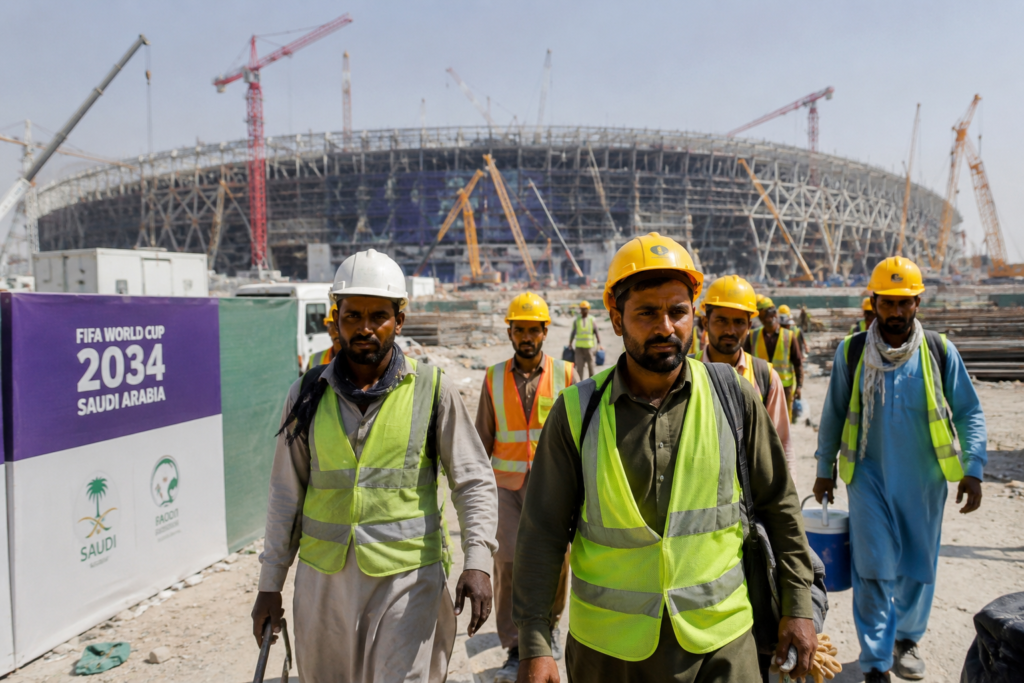
Pakistan is preparing to take advantage of the huge opportunities created by the FIFA World Cup 2034 in Saudi Arabia by training and sending up to 400,000 skilled workers to support projects linked to the global sporting event.
According to official documents, the government is targeting the training and deployment of between 300,000 and 400,000 Pakistani workers for sectors expected to expand rapidly in Saudi Arabia over the coming years. These sectors include construction, infrastructure development, aviation, tourism, hospitality, transportation, and other services that will play a major role in preparations for the FIFA World Cup 2034.
The move is part of Pakistan’s broader strategy to increase overseas employment, boost remittances, and create better job opportunities for its growing workforce. Saudi Arabia remains the largest destination for Pakistani workers, and the Kingdom’s ambitious Vision 2030 development plan continues to generate strong demand for skilled manpower from abroad.
Government records show that Pakistan has already intensified efforts to improve the skills of workers seeking jobs overseas. During the first nine months of the fiscal year 2025-26, more than 215,000 individuals received soft-skills training designed to improve communication, adaptability, productivity, and employability in international markets.
Officials believe that preparing workers years before the FIFA World Cup will help Pakistan secure a significant share of employment opportunities generated by the tournament. Saudi Arabia is expected to launch massive infrastructure and development projects leading up to the event, including stadium construction, transport networks, hotels, airports, and tourism facilities.
Overseas employment continues to be one of Pakistan’s most important economic pillars. In 2025 alone, more than 762,000 Pakistanis registered for overseas employment through official channels. Since 1972, over 15 million Pakistanis have traveled abroad for work in more than 50 countries.
The Gulf region remains the primary destination for Pakistani workers. More than 96 percent of overseas workers from Pakistan are employed in Gulf Cooperation Council (GCC) countries, especially Saudi Arabia and the United Arab Emirates. These workers send billions of dollars in remittances back home every year, helping strengthen Pakistan’s economy and foreign exchange reserves.
Saudi Arabia accounted for over 530,000 Pakistani workers in 2025, representing nearly 70 percent of all overseas employment registrations. Experts believe the number could rise further as preparations for the FIFA World Cup 2034 accelerate.
The government is also working to modernize the overseas employment process through digital systems. New initiatives such as the Pakistan Emigrant Management Framework and the Digital HR Pool are being introduced to make recruitment more transparent and efficient. These systems will help connect employers with qualified workers while reducing paperwork and improving verification procedures.
At the same time, Pakistan is expanding labor partnerships beyond the Gulf region. European countries such as Italy, Germany, and Greece are opening new opportunities for skilled Pakistani workers through labor mobility agreements and migration partnerships.
Economic analysts say the FIFA World Cup 2034 presents a major opportunity for Pakistan. If the country succeeds in training a large number of skilled workers in fields such as engineering, construction, electrical work, hospitality, and tourism services, it could significantly increase overseas employment and remittance inflows over the next decade.
As Saudi Arabia gears up to host one of the biggest sporting events in history, Pakistan is positioning its workforce to play an important role in building and supporting the projects that will help make FIFA World Cup 2034 a success. The initiative could create thousands of new opportunities for Pakistani workers while strengthening economic ties between Pakistan and Saudi Arabia.
With training programs expanding and global demand for skilled labor rising, Pakistan hopes to turn the FIFA World Cup 2034 into a long-term employment and economic opportunity for its people.