Iran Fires Missiles and Drones Toward Strait of Hormuz as Gulf Tensions Escalate
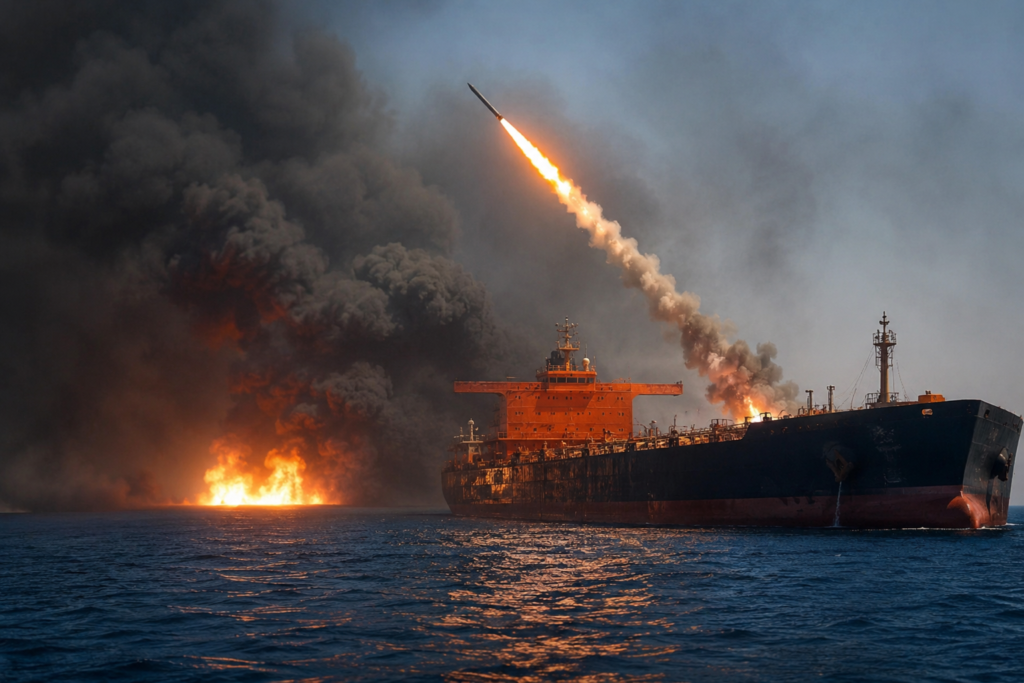
Middle East tensions have intensified again after Iran launched missiles and drones toward the Strait of Hormuz and nearby Gulf countries, according to the United States military. The latest attacks have increased fears of a wider regional conflict and further disruptions to global oil supplies.
The U.S. military said Iran fired seven ballistic missiles toward Kuwait and Bahrain only hours after American forces intercepted four Iranian attack drones near the Strait of Hormuz. U.S. Central Command (Centcom) described the drones as an “immediate threat” to international maritime traffic in one of the world’s most important oil shipping routes.
American forces also carried out strikes on Iranian radar sites located in Goruk and Qeshm Island during the operation. Centcom stated that six of the Iranian missiles were intercepted successfully, while one missile failed to reach its target.
Iran strongly condemned the U.S. military action and called it a violation of the ceasefire agreement reached earlier this year. Iran’s Revolutionary Guard Corps (IRGC) claimed its forces targeted oil tankers attempting to leave the Strait of Hormuz and also launched attacks toward U.S. military facilities in Kuwait and Bahrain.
The IRGC further claimed that American military installations, including facilities linked to the U.S. Navy’s 5th Fleet in Bahrain, were targeted during the retaliation. However, the U.S. military denied reports of damage to its bases and confirmed that no American personnel were harmed.
Bahrain and Kuwait both condemned the Iranian attacks and described them as dangerous escalations in the region. Kuwait’s military said seven ballistic missiles entered Kuwaiti airspace and were intercepted before causing major destruction. Some missile debris reportedly fell into residential areas, causing material damage but no casualties. Bahrain’s defense forces also confirmed that they destroyed several missiles and drones before impact.
The latest military exchange comes as negotiations between the United States and Iran continue to struggle. Efforts to end the conflict have slowed despite repeated claims by U.S. President Donald Trump that the war could soon come to an end.
Speaking on Friday, Trump said the conflict was “largely finished” but warned it could still end “in a more difficult way” if negotiations fail. He also said Iran had become difficult to negotiate with because of its strong position and national pride.
The Strait of Hormuz remains at the center of the crisis. Since fighting between the U.S., Israel and Iran intensified earlier this year, shipping activity in the area has been severely disrupted. Around 20 percent of the world’s oil and gas passes through the Strait of Hormuz, making it one of the most critical energy routes in the world.
The ongoing conflict has already caused global fuel prices, transportation costs and grocery prices to rise sharply in many countries. Analysts warn that any further escalation in the Gulf region could create even bigger economic problems worldwide.
As military tensions continue and diplomatic talks remain stalled, fears are growing that the fragile ceasefire between the U.S. and Iran may completely collapse in the coming days.