KP Government Approves Lifetime Official Passports for Lawmakers
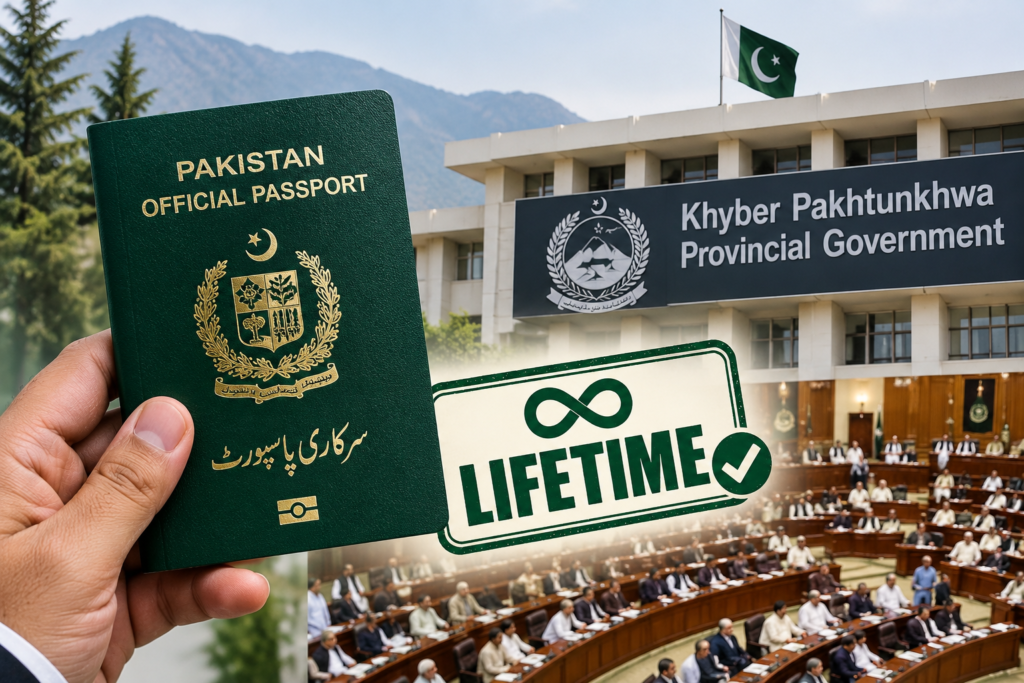
The Khyber Pakhtunkhwa (KP) government has approved a proposal to issue lifetime official passports to members of the provincial assembly, a decision that has sparked public discussion across Pakistan.
According to government officials, the approval was granted during a provincial cabinet meeting as part of changes to the rules governing official travel documents for lawmakers. The decision means eligible members of the Khyber Pakhtunkhwa Assembly will be able to keep their official passports permanently, even after completing their term in office.
The move has attracted attention because official passports are generally issued to public office holders for official government duties and foreign visits. Supporters of the decision argue that lawmakers often continue representing Pakistan at international conferences, parliamentary meetings, and official events even after their tenure ends.
However, the proposal has also faced criticism from political observers and members of the public. Critics believe official passports should remain linked to active public service and should be returned once an individual leaves office. Some have questioned whether the policy is necessary at a time when governments are being encouraged to reduce public spending.
Government representatives have defended the decision, saying it follows legal procedures and is intended to recognize the official status of elected representatives. They also stated that holding an official passport does not automatically provide diplomatic privileges or unrestricted travel benefits.
The approval has already become a topic of debate on social media, where many users are discussing whether similar policies should be introduced in other provinces or reviewed altogether.
Official passports are different from ordinary Pakistani passports. They are issued to government officials and certain public office holders who travel abroad for official state business. Diplomatic passports, on the other hand, are reserved for diplomats and a limited number of senior government officials.
Political analysts say the decision may continue to generate debate in the coming weeks, particularly if other provincial governments consider introducing similar measures. They believe transparency about the purpose and use of official passports will be important to address public concerns.
The KP government’s decision is now expected to be implemented through the relevant administrative departments, while further details regarding eligibility and the issuance process may be announced in the coming days.